The Foundation of Trust: Why Your Choice of Brick Determines the Future of Your Home
Building a home in Pakistan is not just a financial transaction; it is often the realization of a lifelong dream and a legacy for future generations. You spend months finalizing architectural designs, selecting the perfect tiles, and choosing the best paint colors.
Yet, many homeowners overlook the most critical element of the entire structure: The Brick.
The brick is the fundamental atom of your home. It is hidden behind plaster and paint, but it carries the entire weight of your investment. Choosing the wrong brick to save a few rupees today can lead to devastating and expensive problems tomorrow.
At Burewala Bricks, we have spent over 40 years perfecting the art and science of brickmaking. Here is why the quality of the humble brick matters more than you think.
The Hidden Enemy: The Danger of Under-Burnt Bricks
In the local market, you will often find cheaper options categorized as “Doem” (Second Class) or even poorly made “Awal” copies. These bricks are often baked in outdated, inefficient kilns.
The problem isn’t just that they are weaker; the real issue is porosity.
An under-burnt (Kacha) brick acts like a hard sponge. When it rains, or if there is groundwater moisture, these bricks suck up water. This leads to the dreaded “Sem” and “Kalar” (rising damp and salinity) that plagues so many homes in our region.
The result? Peeling paint, crumbling plaster, and a persistent musty smell that no amount of renovation can permanently fix. A strong foundation starts with a brick that resists water, not absorbs it.
The “Metallic Ring”: How to Spot Real Quality
So, how do you ensure you are getting a genuine, high-strength Awal brick? You don’t need a laboratory; you just need your ears.
For decades, contractors have relied on the Metallic Ring Test.
When you strike two high-quality bricks together, they shouldn’t produce a dull thud. They should sing. A sharp, clear, metallic “clink” indicates that the clay has been fused perfectly under intense heat, creating a dense, solid structure with no air pockets.
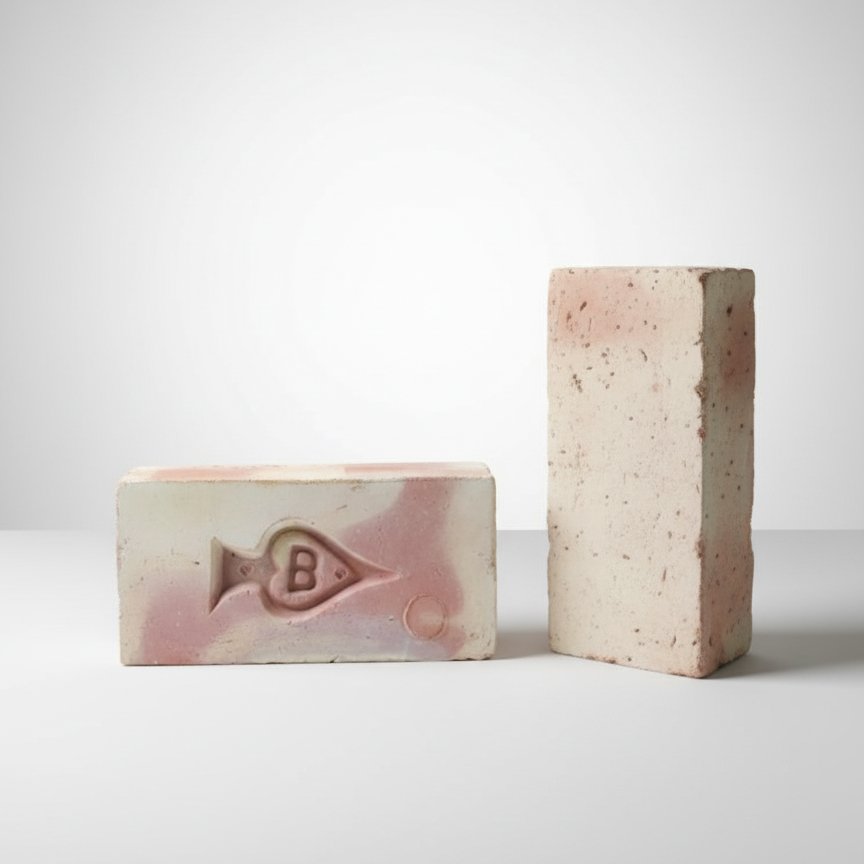
Furthermore, a true quality brick has sharp, 90-degree edges and a uniform deep red color right to its core. If you break a brick and the center is yellowish or dark black, it hasn’t been cooked properly.
The Zigzag Revolution: Why Technology Matters
At Burewala Bricks, we respect tradition, but we embrace technology. We have moved beyond traditional kilns to adopt Induced Draft Zigzag Technology.
Why does this matter to you as a homeowner?
In old kilns, heat often rushed straight up the chimney, leaving bricks in the corners under-cooked. Zigzag technology forces heated air to travel in a winding path through the stacked bricks. This ensures that every single brick in the batch—from the outside edge to the very center—receives the exact same intense heat.
This results in bricks that are:
- Stronger: Higher compressive strength to support multi-story structures.
- Uniform: Consistent size and shape for cleaner masonry work.
- Eco-Friendlier: A modern process that is better for our environment.
Building a Legacy Takes Strength
Your home is likely the biggest investment you will ever make. Don’t compromise its future by cutting corners on the very thing that holds it up.
When you choose Burewala Bricks, you aren’t just buying burnt clay. You are buying peace of mind, knowing that the bones of your house are built with materials engineered to last for generations.